Addressing Genetic Toxicology Across Drug Development: Regulatory and Scientific Perspectives

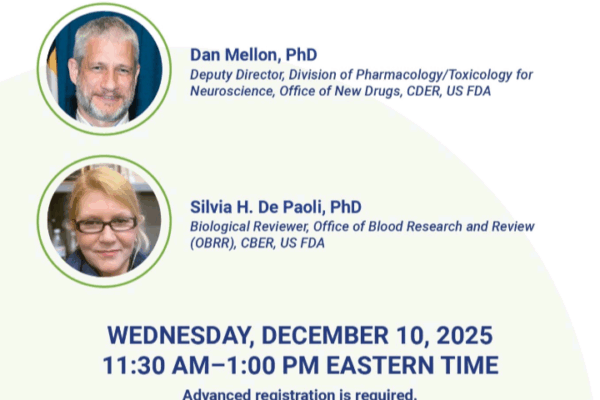
Genetic toxicology remains one of the most critical and consequential endpoints in the safety evaluation of pharmaceuticals. Recent scientific discussions within the toxicology community have highlighted how genetic toxicology assessments are strategically applied across early screening, regulatory development, and emerging impurity-related challenges. These discussions underscore evolving regulatory expectations, advances in testing strategies, and practical pathways…


Read More

European Union Adopts New Toy Safety Regulation, Replacing Toy Safety Directive

The European Union has formally adopted Regulation (EU) 2025/2509 on the safety of toys, replacing the long-standing Toy Safety Directive 2009/48/EC. The Regulation was adopted on 26 November 2025 and published in the Official Journal of the European Union, with the objective of strengthening child protection while ensuring harmonised enforcement across Member States . Unlike…

Read More

NAMs Gain Momentum, but Experts Urge Measured Communication

New Approach Methodologies (NAMs) are steadily influencing modern toxicology and chemical risk evaluation, offering alternatives that reduce reliance on traditional testing strategies. While enthusiasm around these tools is increasing, researchers caution that premature declarations of success may create unrealistic expectations about their current capabilities. Scientific observers note that when bold claims are made before the…

Read More

Why LDL Alone No Longer Predicts Heart Disease Risk

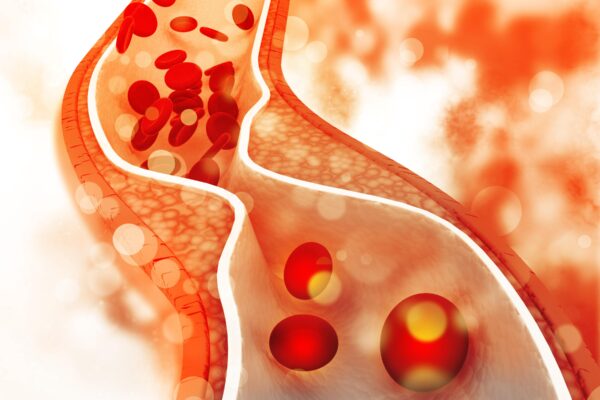
For decades, LDL cholesterol (LDL-C) was considered the primary marker for assessing heart disease risk. But emerging scientific insights show that relying on LDL-C alone paints only part of the picture, sometimes a misleading one. Today, cardiologists and researchers emphasize that heart disease is better understood through particle numbers rather than just cholesterol content. A…

Read More

AI Accelerates a Major Shift in Toxicology, New Review Highlights Breakthroughs

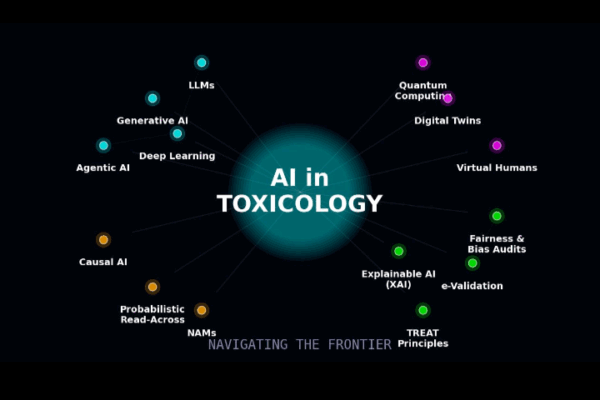
A new review published in Current Environmental Health Reports reports that artificial intelligence (AI) is driving one of the most significant transformations in modern toxicology. According to researchers Thomas Hartung and Thomas Luechtefeld, AI is now central to interpreting complex biological data, predicting chemical hazards, and improving the human relevance of safety assessments, often outperforming…

Read More

ECHA Updates Guidance to Expand Use of In Vitro Methods for Skin Sensitisation Testing

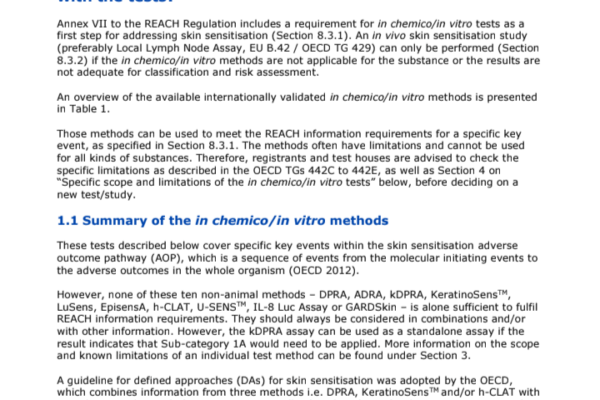
The European Chemicals Agency (ECHA) has released updated guidance on the use of OECD Test Guidelines (OECD TG 442 C–E) and Defined Approaches (OECD GL 497) for Skin Sensitisation, further strengthening the transition toward non-animal testing under REACH. The updated guidance clarifies when in chemico, in vitro, and in silico approaches can be used to…

Read More

FDA Issues Draft Guidance to Reduce Non-Human Primate Testing for Monoclonal Antibodies

December 2, 2025 — The U.S. Food and Drug Administration (FDA) has released new draft guidance aimed at significantly reducing, and in some cases eliminating, six-month non-human primate (NHP) toxicity studies for certain monoclonal antibody (mAb) products. The move marks a major step in the agency’s ongoing efforts to modernize nonclinical drug evaluation and transition…

Read More

FDA Releases Draft Q3E Guideline for Extractables and Leachables: Open for Comments Until January 2026

The U.S. Food and Drug Administration (FDA) has released the draft guidance “Q3E Guideline for Extractables and Leachables,” now open for public and stakeholder comments until 30 January 2026. This draft guideline introduces a comprehensive, globally aligned framework for assessing extractables and leachables (E&Ls) in pharmaceutical products, biologics, and combination medical products. Developed in collaboration…

Read More

Sixth Edition of ISO 10993-1 Released With Stronger Focus on Chemical Risk Mitigation

The much-anticipated sixth edition of ISO 10993-1, the global standard guiding the biological evaluation of medical devices, has officially been released. The updated standard aligns more closely with the risk-based approach of ISO 14971, introducing strengthened emphasis on identifying and mitigating chemical risks associated with medical devices. The revised ISO 10993-1 outlines enhanced principles for…

Read More