
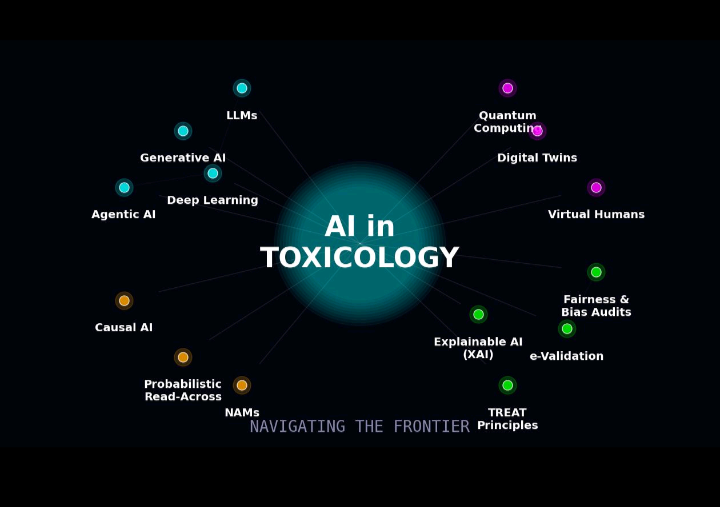
A new review published in Current Environmental Health Reports reports that artificial intelligence (AI) is driving one of the most significant transformations in modern toxicology. According to researchers Thomas Hartung and Thomas Luechtefeld, AI is now central to interpreting complex biological data, predicting chemical hazards, and improving the human relevance of safety assessments, often outperforming traditional animal studies.
The authors note that toxicology has entered a data-intensive era, fueled by high-throughput screening, multi-omics platforms, digital pathology, and expansive chemical databases. As datasets grow in scale and diversity, AI tools, including deep learning, generative modeling, causal inference, and explainable AI, are increasingly essential for extracting meaningful insights and supporting regulatory decisions.
A key concept introduced in the review is “e-validation,” a modern framework designed for adaptive AI systems. It incorporates automated reference chemical selection, virtual toxicity simulations, mechanistic cross-checking, and continuous post-validation monitoring, all aligned with the TREAT principles of trustworthiness, transparency, reproducibility, explainability, and applicability.
The authors also emphasize the need for ethical safeguards, including bias audits, equitable data governance, and strong human oversight. Rather than replacing experts, AI is expected to act as a scientific co-pilot, enabling faster, more accurate, and more humane approaches to chemical safety testing.
Source:
Luechtefeld T, Hartung T. Navigating the AI Frontier in Toxicology: Trends, Trust, and Transformation. Curr Environ Health Rep. 2025;12:51. doi:10.1007/s40572-025-00514-6